

How Cannabis Packaging Design Works
By Laksman Frank
Cannabis packaging design is the work of deciding how a pack looks, feels and functions. Then those decisions have to survive artwork, proofs, samples and production. At Budder we handle all of it as one team, so what we design is what arrives.
Headliners is a good example. We designed slide tins for the pre-rolls with a shape of their own, and they attach magnetically to a custom Flip Display. The display holds each tin facing out so shoppers can see the artwork. It also brings the product forward, closer to the customer, and invites interaction.
We've helped bring more than 50 brands to shelf across cannabis and consumer packaged goods. Here's how the process works, and what you'll need at each stage.
What does cannabis packaging design include?
Packaging design isn't only about how a pack looks. It's also about how it feels in the hand, how it fits and protects the product, and how it carries the brand as the product line grows. That's why our work covers more than just artwork.
It starts with fit. We work from the real container and product dimensions before any digging into artwork. Then we fill a sample with the product and try opening and closing it. It's worth handing that sample to the person who will pack the order, too. They'll have to live with the closure for a lot longer than the design team will.
Next comes hierarchy. We decide what someone should read first when the pack is six inches across on a screen and two inches across in the hand. The brand, product name and variant share that space with the warnings, symbols and other information your reviewers supply for each market. If you still need a name or a visual identity, our brand design process is a good place to start.
Then there's production. A supplier needs the design translated into instructions for printing, cutting, folding and finishing the pack. Our cannabis packaging design services deliver the creative concepts and the artwork. Our packaging supply services cover sourcing the pack, physical samples and working with the supplier through production.
You can bring us a finished design, or we can take care of the design too. When one team handles both, the work moves from design into production with no surprises or bottlenecks. If you're keeping your own supplier, we'll work out which steps they handle. Either way, we agree up front who checks the proofs and who signs off on the run.
So cannabis packaging design includes the structure, the artwork and the production details. Together they get the pack made the way it was designed.
How does the process work, step by step?
Every project moves through the same stages, and each one ends with an approval. The table shows what you bring, what we deliver and what you sign off on.
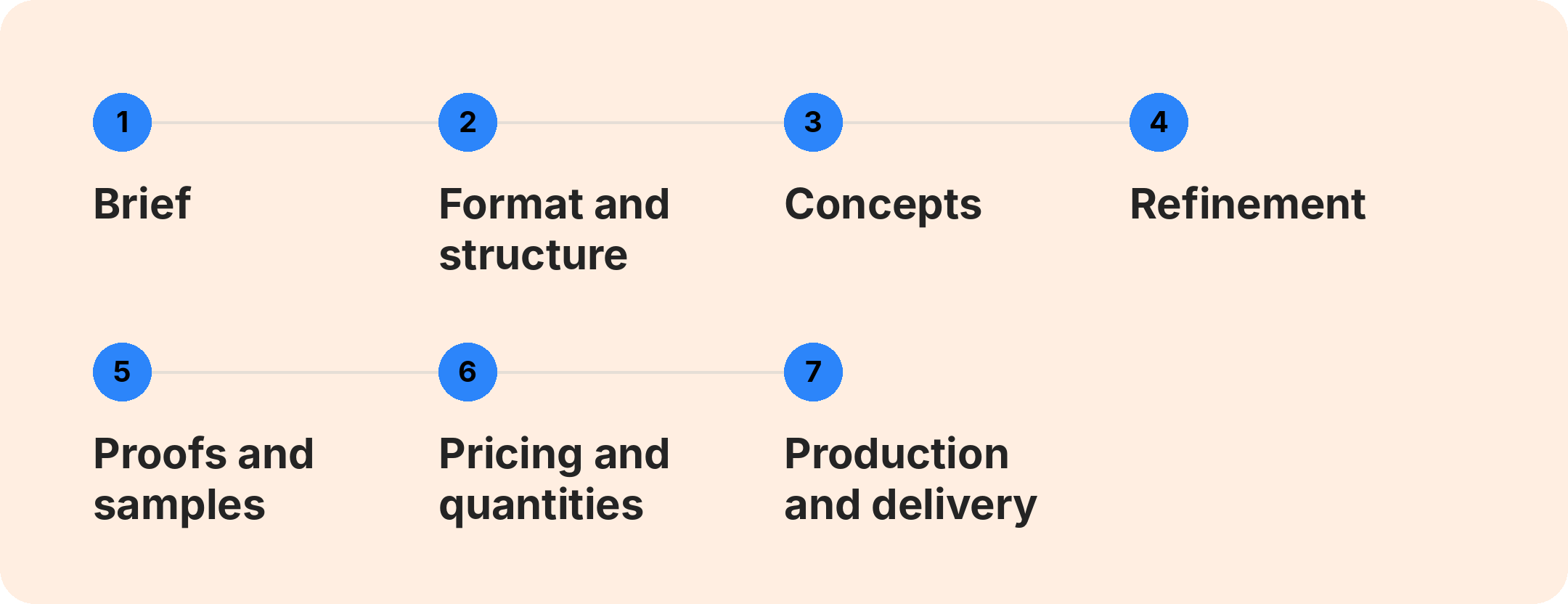
The approvals in a Budder packaging project.
Stage | What you provide | What Budder delivers | What you approve |
|---|---|---|---|
Brief | Product details, markets, goals, budget parameters, target date | Agreed scope, priorities, and packaging requirements | Brief and project scope |
Format and structure | Filled dimensions, filling method, operational constraints | Format recommendations, material options, structural direction | Container, dimensions, and closure direction |
Concepts | Brand assets, product hierarchy, decision-maker feedback | Creative directions applied to the selected format | A direction to develop |
Refinement | Final copy, SKU information, required label content | Developed artwork and a consistent product family | Artwork, information, and SKU system |
Proofs and samples | Consolidated comments and compliance review | Coordinated proofs, samples, and proposed corrections | The specified proof and physical sample |
Pricing and quantities | The quantities you're considering | Pricing estimates for your review | Pricing and quantities |
Production and delivery | Final sign-offs, confirmed production details and the delivery destination | Released artwork and specifications, production with our partners, then shipping, taxes and duties | Files and specifications released for production |
Two parts of that table are easy to miss.
Before production, we send pricing estimates for you to review. Production starts once pricing and quantities are settled.
After production, we manage shipping, taxes and duties. We arrange the boat or air freight and make sure the order arrives at its destination.
How does custom cannabis packaging design start?
Good packaging design starts with the product and builds outward from there. So the first thing we need is a clear picture of the product itself. That means size and weight, count, category and compliance requirements. It also means storage notes, such as refrigeration or a pack that must sit upright.
From there, we write down what the pack needs to do. If the closure sticks on your current pack, or the products no longer look related, bring examples from the product line. Tell us where the pack will sit, when you need it, what goes inside and which containers you want to keep. The filling equipment specs help too.
Custom can mean different things. Custom cannabis packaging design might be a new label on a stock jar, or a jar made to your specs. Ask to hold a sample of the container shown in the rendering. Then find out which parts come from a catalog and which the supplier has to make.
Review concepts, then refine the product family
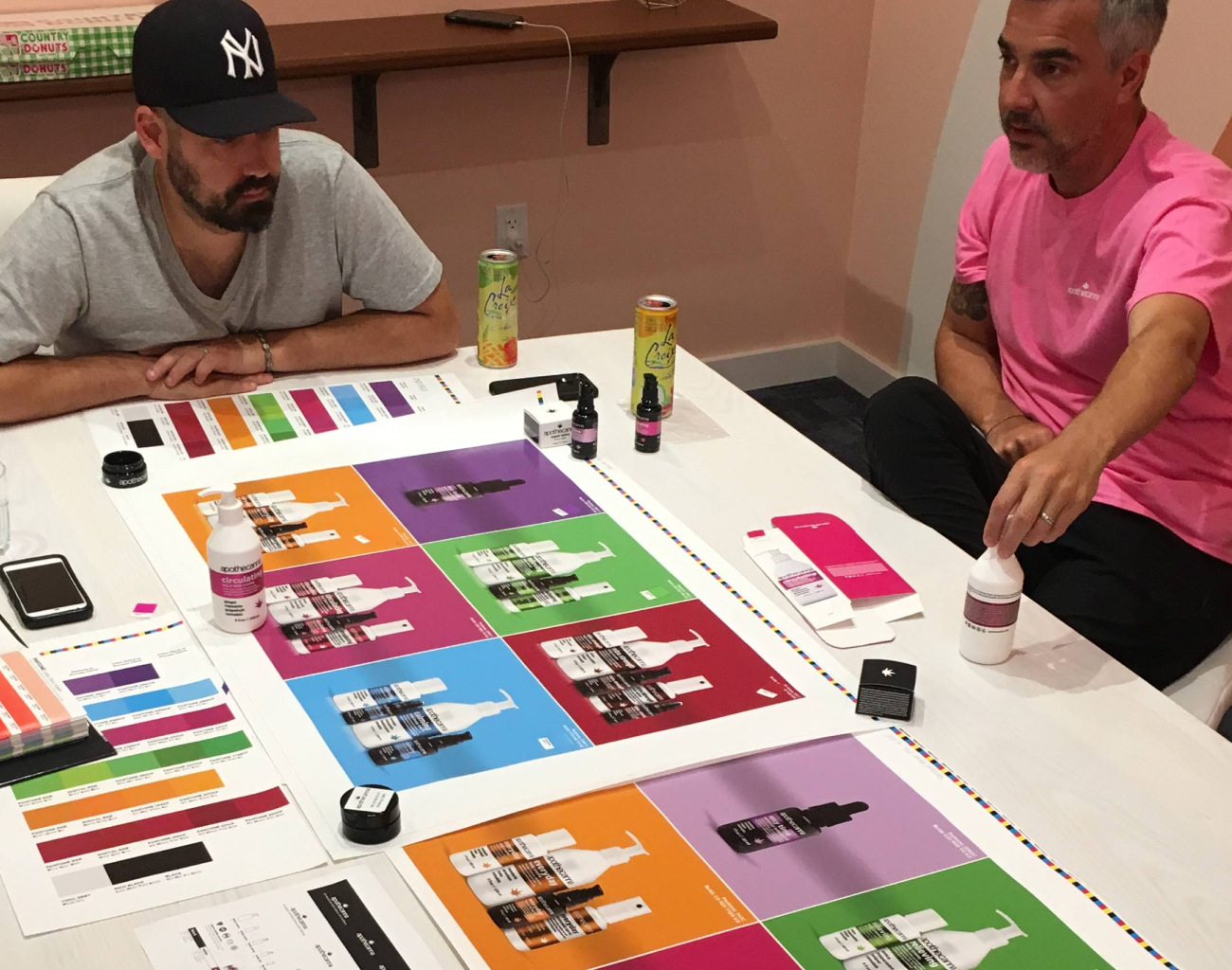
Concepts look different at full size, so we print the front, sides, lid and outer carton at actual size. Then we look at the pack from the angle a shopper will see it. A font that reads fine on a monitor can get hard to read on a label.
Most importantly, we run the longest names and the different quantities through the chosen layout before extending it to every SKU. That shows which lines need more room. It also shows which elements have to stay put so shoppers recognize the packs as a family.
It helps to pass a sample across a counter, too. The shopper sees the front, but the person looking down into the case might see a row of identical lids. Try the strain name on the lid. Then put two variants side by side and see how quickly you can tell them apart.
Check proofs and samples before production
Each kind of proof answers a different question. We use PDF proofs to quickly review and approve artwork. We request structural samples to see how the pack opens and how the components fit together. To judge how the graphics and finishes look on the real material, we ask for printed samples. And we always make it clear exactly what is being approved.
Feedback goes back to the supplier as one marked-up proof. If sales wants a bigger name and the packaging reviewer needs that space for a warning, we settle it together first. Then we check the spelling of every variant and date the approved copy.
Release a defined set of production files
Once pricing and quantities are settled, we release the artwork with its approved dieline, material, print method and finish. The dieline marks where the pack is cut or folded and where you can print. Our designers stay involved through sampling, production and quality checks. We also agree who answers supplier questions and who reviews corrections after artwork approval.
Every SKU gets a clear name and every file a version number, so both teams can check the order against the sign-off record. The artwork stays paired with the container it was drawn for. If the container changes, we check the dieline before the files go back into production.
What do you need to have ready before you start?
The more we know at the start, the fewer surprises later. Bring the product, your SKU list and your brand files. Here's what helps most:
Measurements of the product as it will be packed, including any inserts, seals and closure requirements. For a refresh, send the current pack too.
Your SKU list, marked with what's launching now and what can wait. Include the longest name and the smallest pack in the launch product line.
Usable logo files, fonts, guidelines and approved copy.
The name of the person who reviews regulatory content for your markets. They need to be part of the approval process.
Where you'll sell the product and when you need the packs in hand.
A photo of the shelf or case. Show how the packs will arrive, where they'll be stored and which side a shopper will see.
Don't worry if something is still open. If the co-packer is still checking whether a tube fits the line, write that down with the name of the person who can answer.
Hamilton Farms needed a brand and packaging system for its New Jersey launch. We developed the identity across custom mylar bags and labels on stock jars and tubes. Metallics, gloss accents and custom patterns connect the formats. We also built the in-store fixtures for the Hamilton Farms packaging project with modules from our Flip Display System.
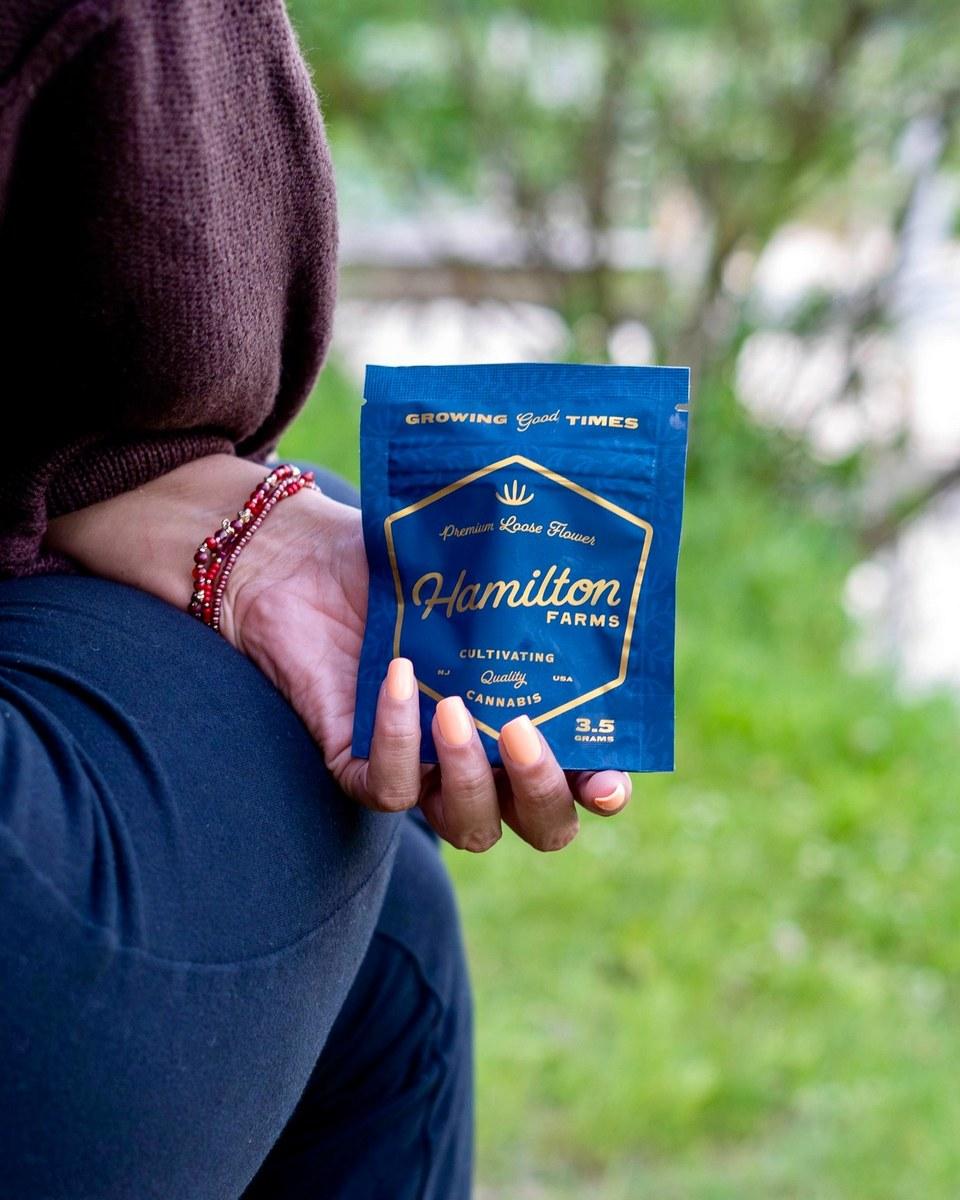
Hamilton Farms flower pouch with the brand wordmark and gold graphic details.
How do materials and finishes change the design?
The same artwork can look different on every material. Put a paperboard carton next to a glass jar under the same light, and the same black can print differently on each. When packs need to match, we ask the supplier for a sample of each.
Shape changes things too. A pouch should be filled before anyone judges the artwork, because the graphics sit differently once it takes shape. We check how much of the label you can read around a jar. We also check where the design meets a fold, an edge or the seam of a tin lid.
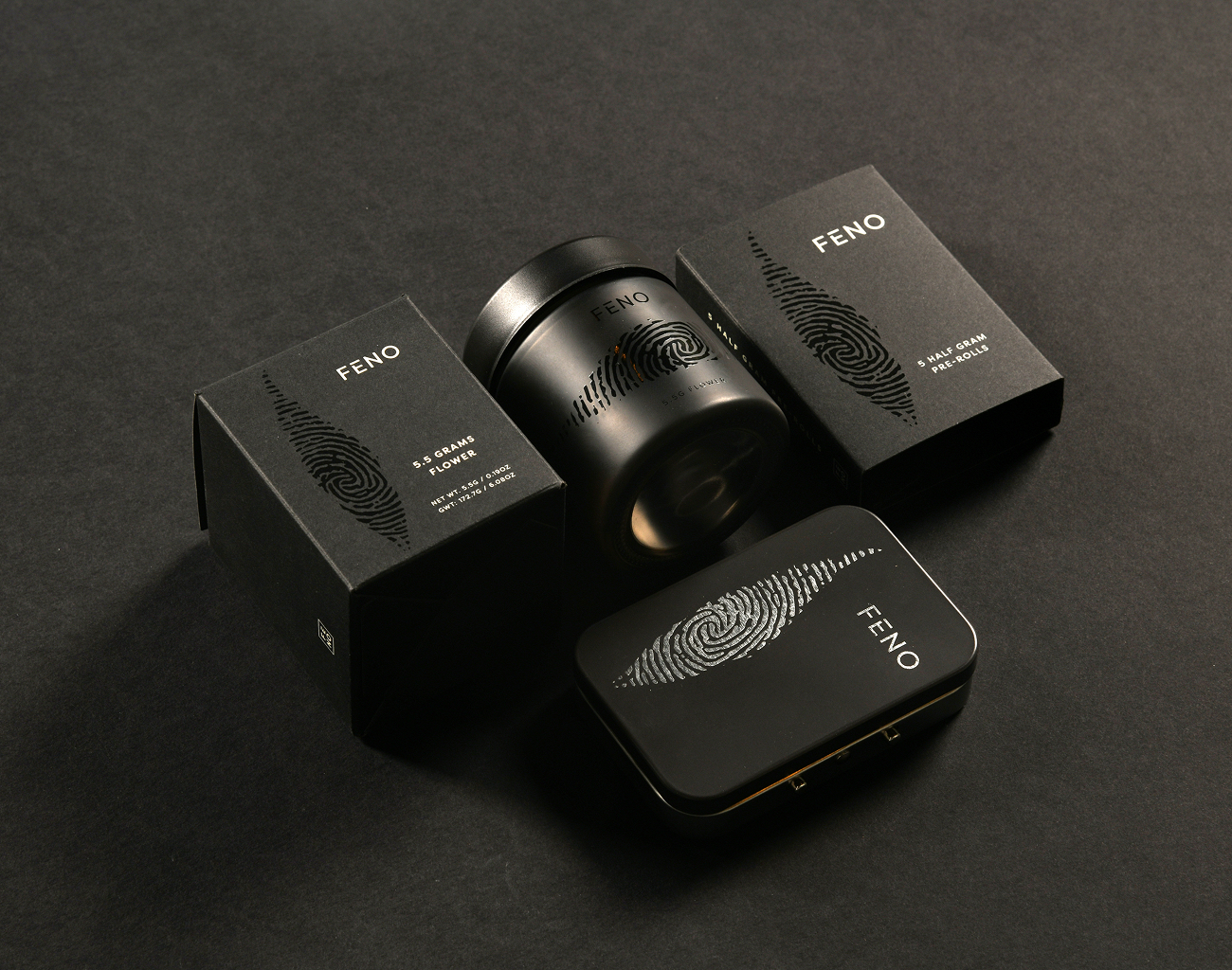
Feno shows why this matters. The fingerprint-leaf identity needed to look consistent across glass, paperboard and tin. That meant working through color matching and black-on-black finishes on each material. Our Feno packaging case study shows those decisions in the finished product line. The brand identity earned a place on the 2023 Clio Cannabis Shortlist.
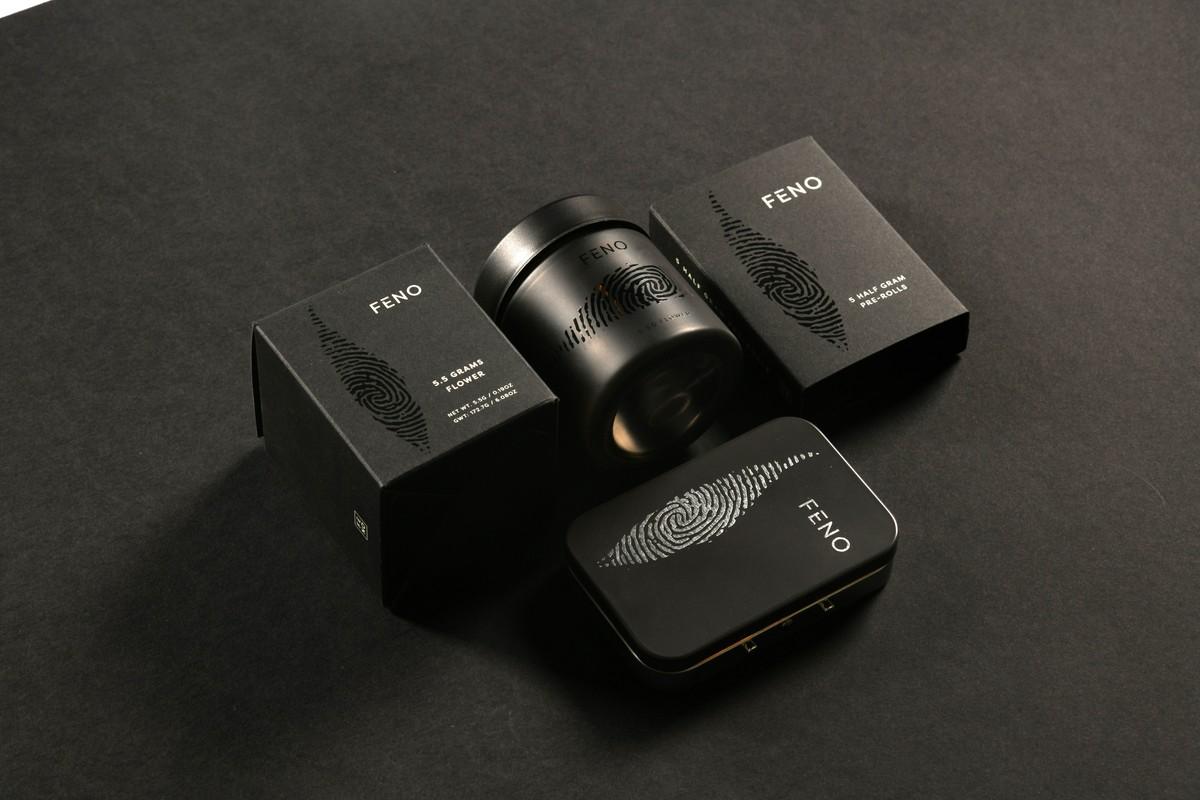
Feno packaging with fingerprint-leaf marks carried across cartons, a jar, and a tin.
Samples are best judged where the packs will sit. If the mark on the jar disappears when you step back, tilt the jar and look for glare. We mark which areas should be matte or gloss and where each finish meets the artwork. If a finish changes during sampling, read the product name and logo again on the new surface. And keep the samples you approve. You'll want them for the next supplier or print run.
How do you design for the dispensary shelf?
A pack is only finished when it works on the shelf. If you're comparing cannabis retail packaging design services, bring the pack and a shelf photo. Ask each team what a shopper could read from the aisle.
It helps to know which part of the pack customers see in that store, and your retail partner or sales team can tell you. It might be the front, the lid or a carton behind glass. Check with the shelf lip and price ticket in place, because either can hide the name or variant.
For Ethos' music-themed Headliners brand, we developed the name, identity, packaging and point-of-sale display together. The slide tins attach magnetically to a custom Flip Display, which presents the fronts toward shoppers and brings the product forward. The Headliners pre-roll packaging case study shows how much of the tin a shopper sees once it's mounted.
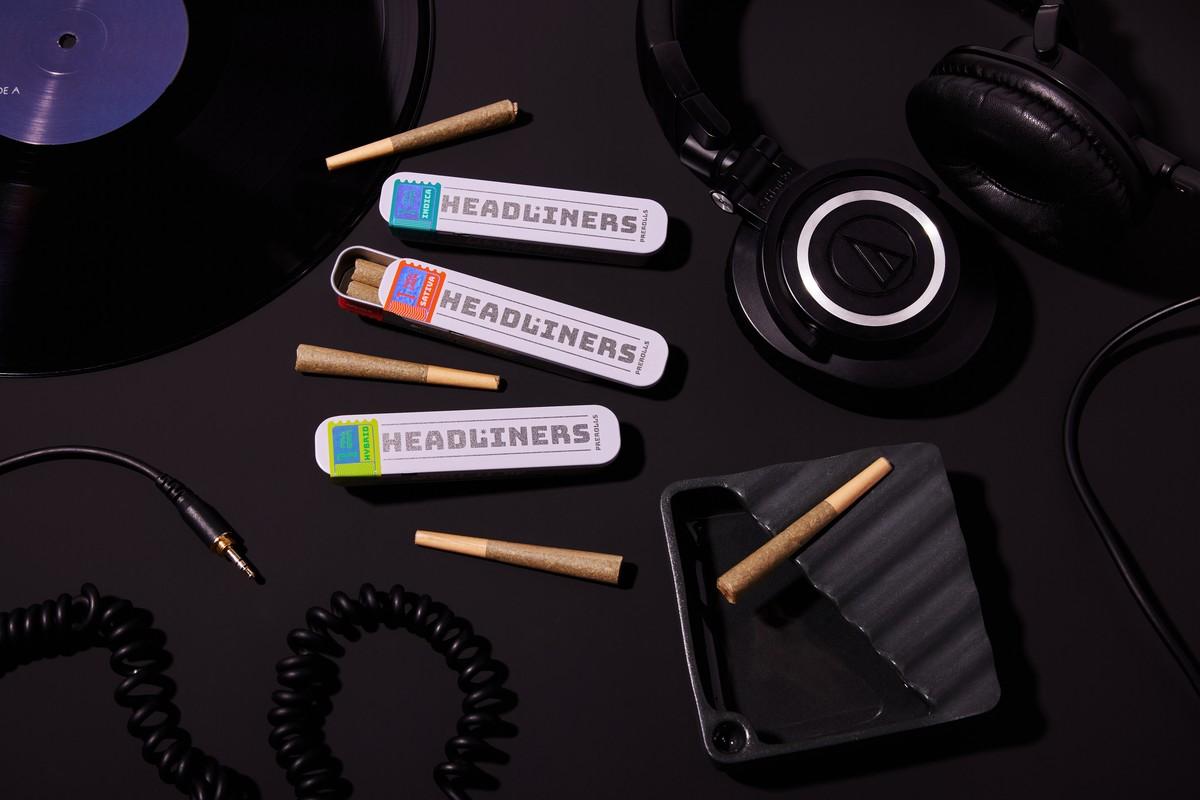
Headliners pre-roll tins in a product photograph with music props.
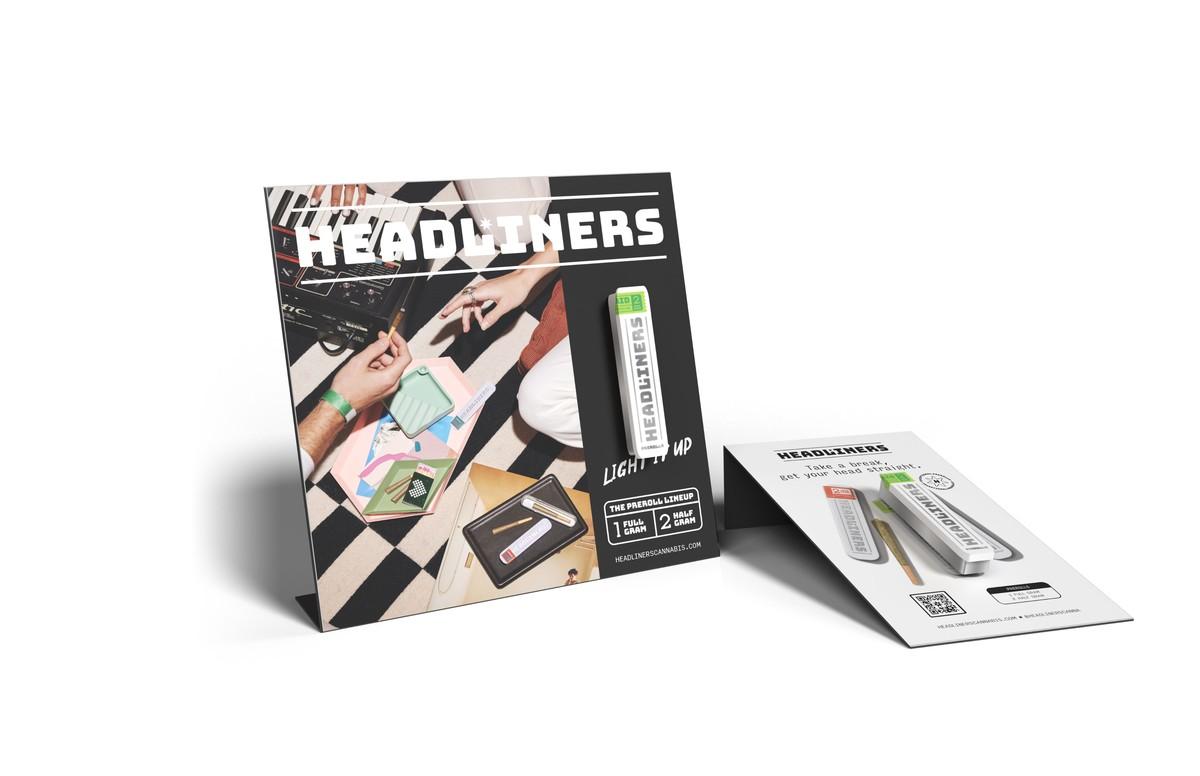
Headliners point-of-sale display concept rendering showing pre-roll tins and branded display panels.
Headliners earned a place on the 2023 Clio Cannabis Shortlist for Brand Identity. It works because the pack and the display were designed together. Before approving your own pack and display, try the two together. A perfectly good tin can tip in a tray made for a different one. We record the attachment and the footprint in the brief, while both teams still have time to change them.
Should you work with a designer, a supplier, or both?
The two roles are different, even when one team covers both. A cannabis packaging design agency works out how the pack should look and function. The supplier knows which formats, materials and print processes they can run.
At Budder we handle design and supply together, and we manage production through our partners. That's the idea behind Brand to Shelf. One team takes the work from the first concept to the finished pack, with no handoffs in between.
If you already have a supplier, that works too. Bring their dielines and specs to the first design meeting. If you already have artwork, we'll check it against the format the supplier will use. Either way, agree who resolves production questions and who approves samples and artwork changes. If the paper stock sells out, someone needs the authority to sign off on a substitute.
One question is worth asking any team you're considering. Who presents the creative work, and who takes the printer's call after you approve it?
Frequently asked questions
How long does cannabis packaging design take?
It depends on the number of variants, custom parts and rounds of sampling. We work back from the dates your supplier needs the approved dieline, artwork and signed sample. Then we leave time for shipping.
How are packaging design and production different?
Design sets the pack's structure, artwork and production specifications. Production makes the pack with those materials and processes. A physical sample is where the two meet. It shows whether the pack looks right and does what you need it to do.
Can you redesign packaging for an existing brand?
Yes. Bring the current packs, artwork and supplier details. Show us what's causing trouble and which parts customers already recognize. That helps us decide whether to change the graphics, the format or both.
What files do I get at the end?
Look for approved artwork on final dielines, plus print and finish instructions, in the scope. Confirm editable files, linked assets and font licensing separately, especially if another team will pick up the work later.
Have a shelf photo or a pack that's giving you trouble? Book a call and bring it along with your artwork and product list. We'll look at what you already have and which decisions are still open.